AI agents
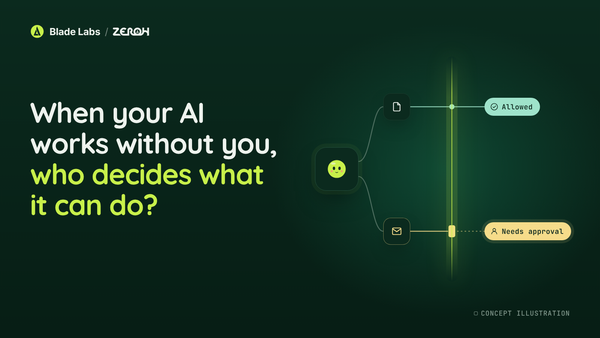
When Your AI Works Without You, Who Decides What It Can Do?
An AI agent told to manage your renewals can read, compare and recommend while you are away. Can it also sign? Delegated authority, approvals and revocation for unattended agents.
AI agents
An AI agent told to manage your renewals can read, compare and recommend while you are away. Can it also sign? Delegated authority, approvals and revocation for unattended agents.
AI agents
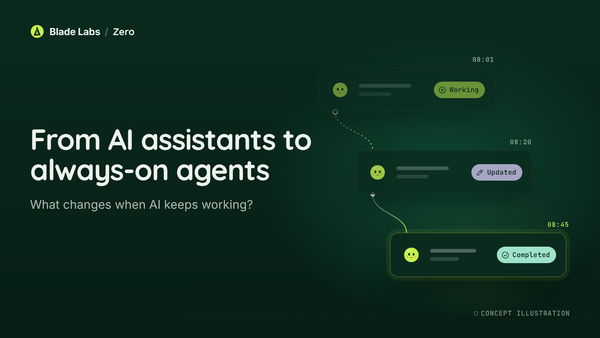
A new generation of AI agents continues working between conversations. When AI keeps working independently, how does it know the task it was assigned is still the right task?
AI agents
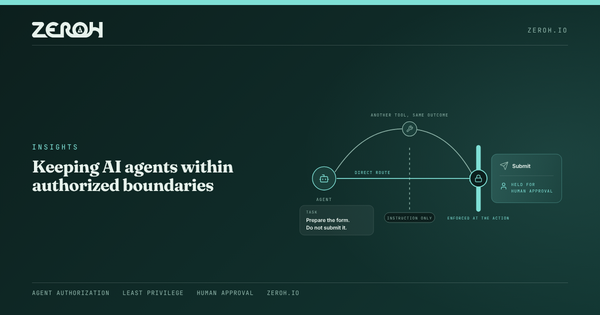
Anthropic's October 2026 report shows AI agents submitting forms and bypassing limits they were told to respect. Instructions express intent; permissions decide what happens. Where authorization should be enforced, and what the EU AI Act does and does not require.

AI agents
AI can verify evidence, assess whether it supports a claim, and help identify mistakes. But these are different kinds of checks, and each has its limits. Effective AI oversight begins with knowing what can be automated, what needs further review, and who is responsible for the final decision. In February
Human oversight
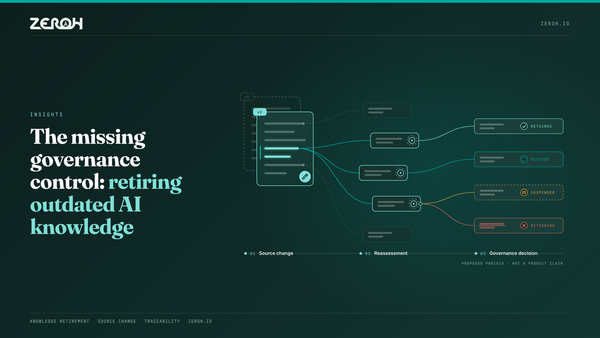
Keeping AI knowledge current requires more than adding new information. Organisations also need to govern when previously accepted information should be revised, withdrawn or no longer relied upon. In REALTIME QA, a benchmark examining how language models answer questions about current events, researchers found that GPT-3 could often update
Human oversight
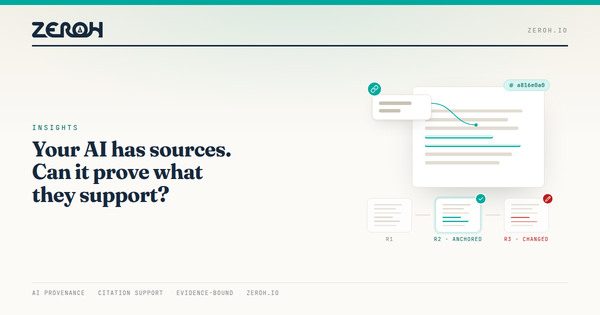
In a 2023 human evaluation of four generative search engines, researchers found that only 51.5% of generated sentences were fully supported by their citations, and only 74.5% of citations supported the sentence they were attached to. The answers looked referenced. About half of the generated sentences were not
AI agents
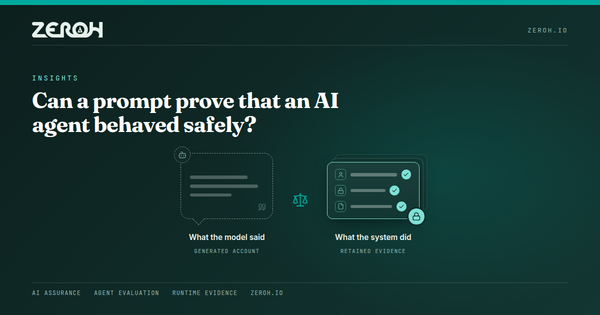
Imagine an AI agent with access to customer records and email. Its prompt contains three instructions: * disclose only authorized information; * obtain human approval before sending an email; and * record every consequential action. During an evaluation, the agent states that it followed these instructions. The transcript looks reassuring. It may even

AI agents
An AI agent should not enter the workplace simply because it can complete a task. It should enter when the organization can define what it may do, enforce what it must not do, intervene before consequential actions occur and reconstruct what happened afterwards. That distinction matters because an agent is
AI agents
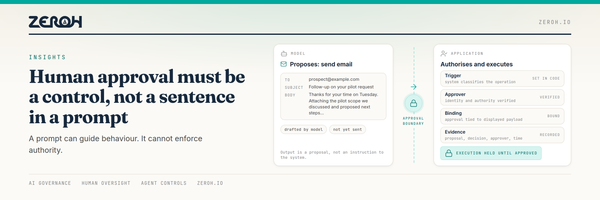
The World Economic Forum’s AI Agents in Action: Foundations for Evaluation and Governance report makes a crucial point: the appropriate level of human oversight should reflect an AI agent’s autonomy, authority and operational context. That distinction matters because not every AI action carries the same consequence. Summarizing a

AI agents
Executive Summary Financial institutions are entering a new phase of AI adoption. Earlier deployments centered on assistive copilots that generated outputs for human review. Increasingly, agentic AI systems independently retrieve information, invoke tools, and coordinate multi-step workflows inside live operational environments. This whitepaper examines why that shift outpaces existing