From AI Assistants to Always-On Agents: What Changes When AI Keeps Working?
A new generation of AI agents continues working between conversations. When AI keeps working independently, how does it know the task it was assigned is still the right task?
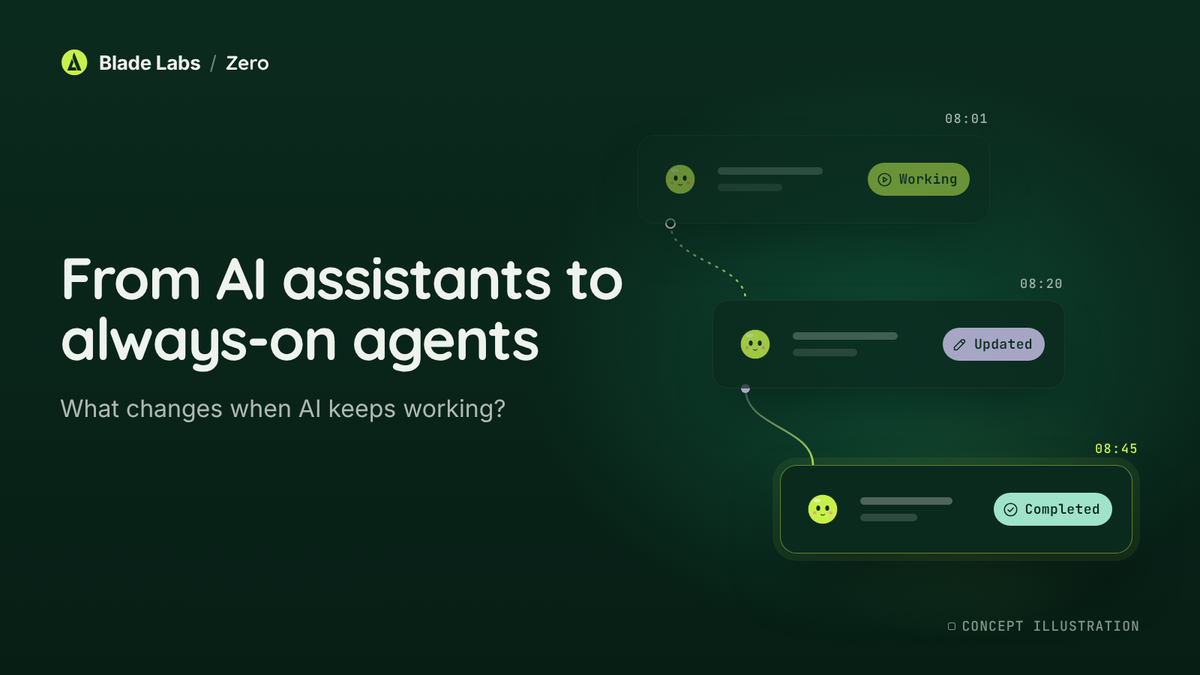
An AI assistant typically responds when someone asks it to do something. It may answer a question, analyze a document or complete a defined task. Once the interaction ends, the next step usually depends on the user returning with another instruction.
A new generation of AI agents is beginning to change that relationship. These systems are designed to continue working between conversations, monitor connected applications, carry out recurring responsibilities and return when something requires attention.
In September 2026, OpenAI introduced dots, persistent agents equipped with their own cloud computers that can work towards a person’s goals over time. Anthropic followed in October with Claude Duet, a proactive agent in research preview that monitors connected applications, prepares work and alerts users when their attention is needed.
Similar approaches appear in Grok Bot, introduced in August, and Meta’s Muse, launched in September. Both are designed to work across applications using dedicated computing environments.
These announcements describe different products, architectures and stages of availability. They do not establish comparable levels of reliability or autonomy.
What they collectively signal, however, is an important shift in how people may work with AI: an assignment no longer needs to end when the conversation does.
That change introduces a practical challenge. When AI continues working independently, how does it know whether the task it was originally assigned is still the right task to perform?
From Individual Prompts to Continuing Responsibilities
Traditional AI interactions generally have a recognizable beginning and end. The user provides instructions, the system responds, and the user decides what happens next.
Microsoft’s 2026 Work Trend Index sorts human-AI work into four modes by how much the person directs and how much the agent carries. Persistent agents move work into the delegation corner and keep it there for longer.
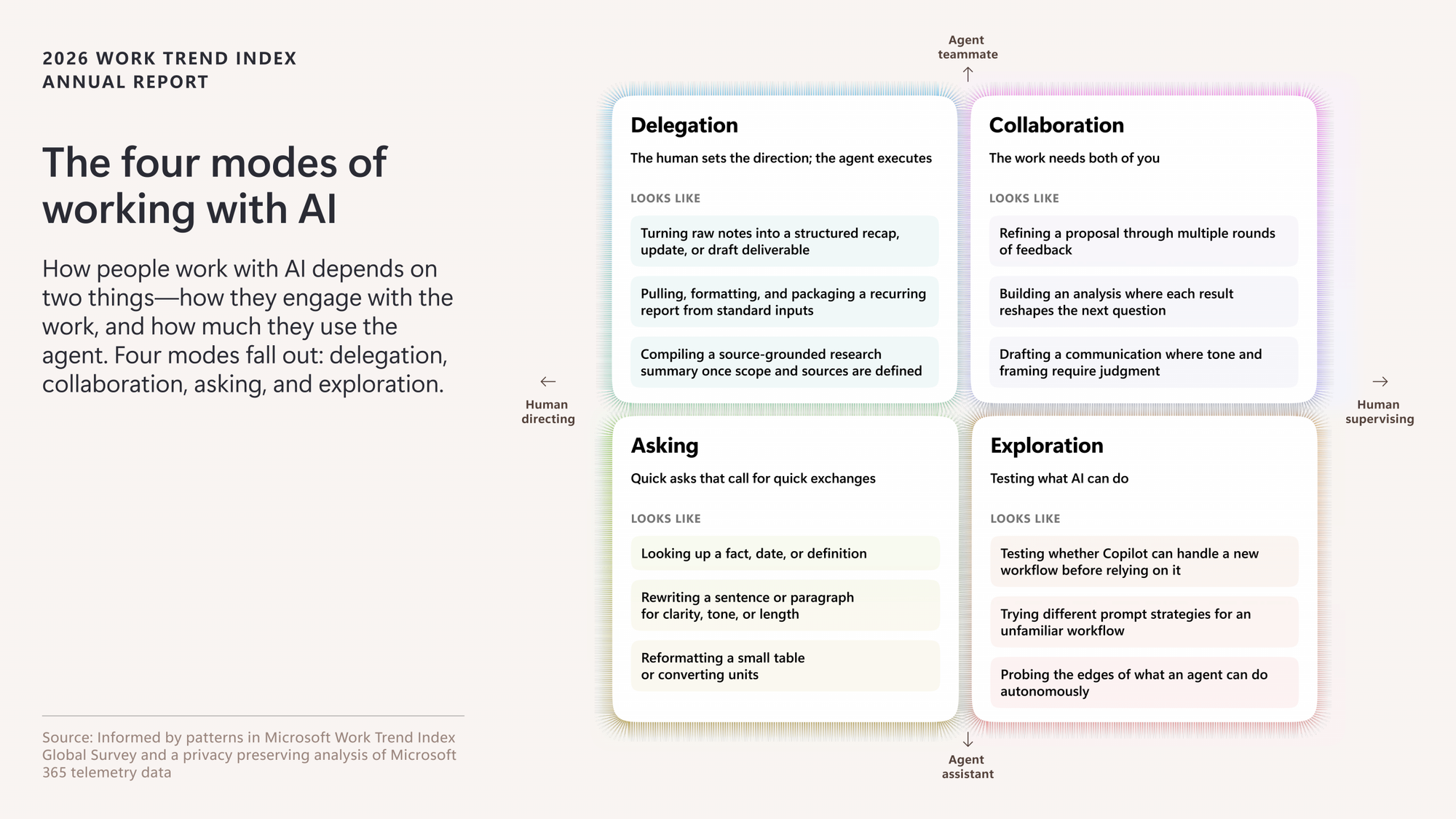
Persistent AI agents introduce a longer working relationship. A person might instruct an agent to monitor their inbox, prepare a weekly project update, follow up on unresolved tasks or notify them when new information becomes available.
The assignment may remain active for hours, days or weeks.
This creates a distinction between completing an instruction and fulfilling an ongoing responsibility.
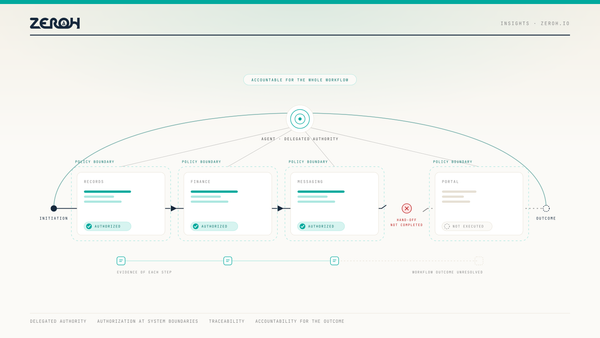
Consider a small consultancy that produces weekly updates for its clients. An AI agent could gather project information from connected applications, identify outstanding questions and prepare a draft every Friday.
The recurring schedule is straightforward. But the work itself depends on circumstances that may change throughout the week.
A client could cancel the engagement on Wednesday. A colleague might resolve an outstanding issue without updating the original task. The project deadline might move, or the source documents might no longer reflect the latest decisions.
If the agent continues preparing Friday’s update without accounting for these changes, it may successfully execute its scheduled instructions while producing something the business no longer needs.
The distinction matters because a completed execution is not necessarily a useful outcome.
A scheduled trigger determines when work begins. It does not establish whether the work remains relevant.
For persistent AI agents, continuity must therefore include more than repeated execution. It requires a way to preserve the purpose of an assignment while recognizing when its underlying assumptions have changed.
Why Persistent AI Agents Need More Than a Schedule
Scheduling has long been part of business software. Automated systems can generate recurring reports, send reminders or execute defined workflows at regular intervals.
What makes an AI agent different is its ability to interpret information, select actions and respond to situations that may not follow a fixed sequence.
That flexibility creates opportunities for more useful assistance. It also makes the quality of the outcome harder to assess.
An agent preparing a client update might encounter a missing document, a contradictory project status or an unexpected change in scope. A conventional scheduled workflow could simply record a failure or continue with the information available.
An AI agent may be able to investigate the discrepancy, identify what is missing and prepare the parts of the update that remain useful.
But this capability depends on how the agent is instructed, what information it can access and whether it can recognize the limits of its available context.
The recent product announcements illustrate different approaches to persistent work.
OpenAI describes dots as agents that can continue working towards goals using connected applications and their own computing environment. Meta describes Muse as an agent that can advance tasks after the user closes the application and return when circumstances change or approval is needed.
Anthropic’s approach provides an additional operational detail. According to its Claude Duet announcement, the agent checks connected accounts at intervals rather than continuously. Anthropic explains that more frequent checks consume additional usage capacity and acknowledges that the research-preview system may misread a thread or mis-calibrate what is urgent.
This highlights an often-overlooked aspect of always-on AI: persistent responsibility does not necessarily require uninterrupted execution.
A system may remain responsible for a task while periodically waking to inspect new information, performing work when necessary and returning to an idle state.
The more consequential question is whether that sequence preserves the continuity of the assignment.
Can the system retain the latest instructions? Can it distinguish new information from outdated records? Does it recognize when a task is complete, cancelled or waiting for someone else?
These are the operational questions that determine whether recurring AI work is genuinely useful.
What Happens When Instructions Change?
Continuity becomes particularly important when users correct or modify an existing assignment.
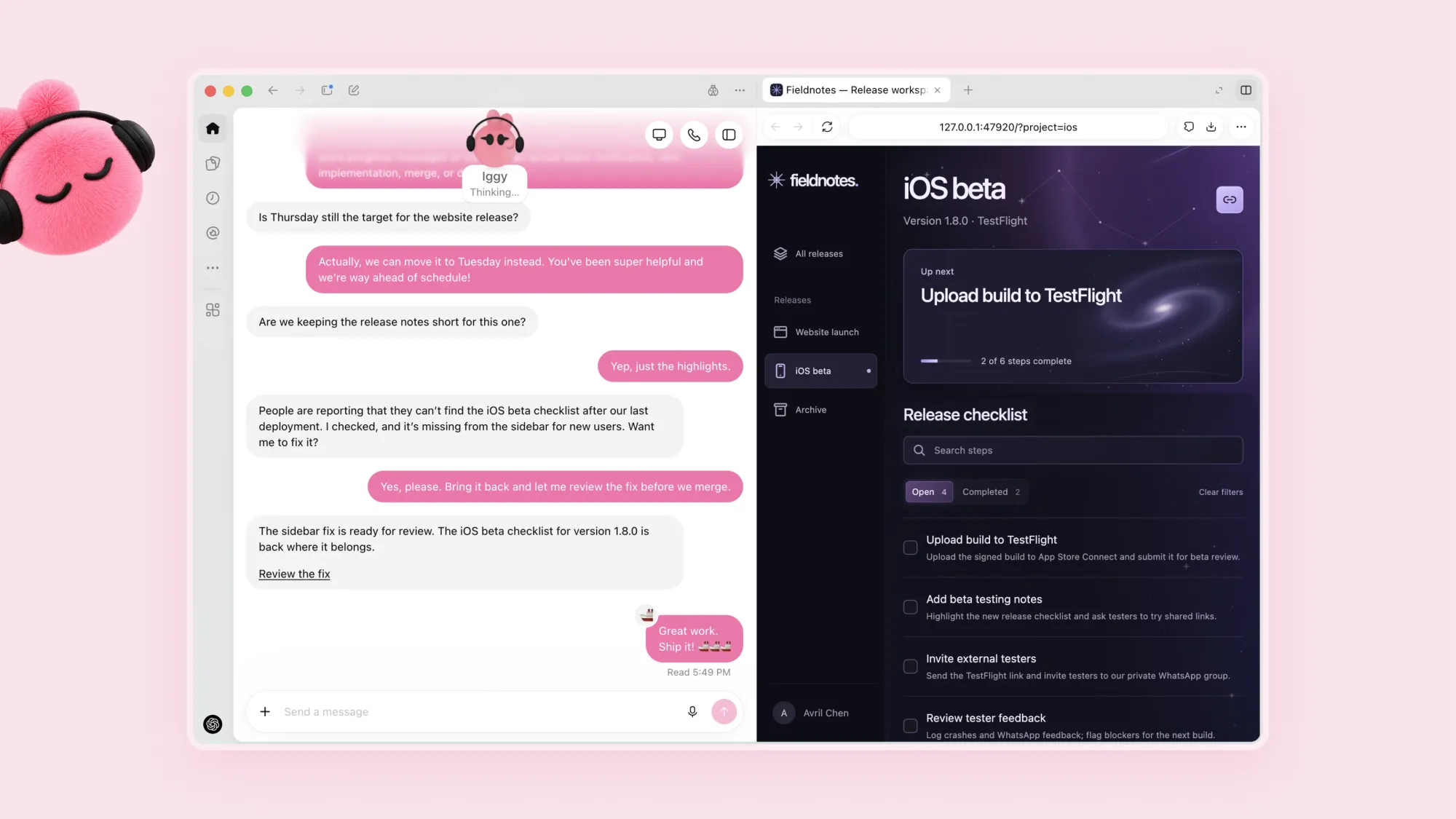
Suppose the consultancy’s project manager tells the agent on Tuesday that the weekly update should exclude financial information until the figures have been reconciled.
On Thursday, another colleague uploads revised project documents containing financial data.
When the scheduled update runs on Friday, which instruction governs the draft?
A reliable workflow should retain the relevant correction and apply it when preparing the next update. It should also recognize whether the new information changes the circumstances under which the correction was given.
That requires a distinction between the information collected during execution and the instructions governing how the information should be used.
The agent also needs to make uncertainty visible. If it cannot establish whether the revised financial figures are approved, it should identify that unresolved dependency rather than quietly treat the latest document as authoritative.
This is where the concept of an AI chief of staff becomes useful.
A chief of staff is expected to maintain continuity across responsibilities, understand changing priorities and direct attention towards decisions that matter.
For an AI system, this is a useful design objective, but the title itself establishes no particular capability.
The practical test is whether the agent can carry forward an instruction, incorporate an appropriate correction and communicate the outcome clearly.
A system that repeatedly requires its user to reconstruct the task’s context may offer automation without providing much relief from the coordination work it was intended to reduce.
How Should Businesses Evaluate Always-On AI Agents?
Organizations considering persistent AI agents should begin with a recurring responsibility whose outcome can be assessed.
A weekly client update is one example. Instead of evaluating only whether the agent generated a document on time, the business could examine whether it used current information, preserved the latest instructions and identified unresolved issues.
A useful evaluation should include a deliberate change in circumstances.
For example, the organization could modify the reporting deadline after the schedule has been created, introduce an unavailable source document or withdraw the assignment before the next run.
The evaluation should then examine what actually happened.
Did the scheduled work proceed against the updated instruction? Was the missing information identified? Did the system report that the task could not be completed? If the work was cancelled, did execution stop without producing unwanted downstream activity?
These observations provide a more meaningful picture than task counts alone.
The same principle applies to the agent’s status reporting. A notification that a task is complete should identify the result. A task that is blocked should explain what prevents further progress. A paused or cancelled assignment should not appear indistinguishable from one that is still running.
Businesses can also assess how much attention an agent actually saves. Ten automatically generated reports requiring substantial human correction may deliver less value than two dependable reports that clearly identify their remaining uncertainties.
Completion rates, correction effort, source freshness and the visibility of unresolved work are therefore useful evaluation measures.
They are not universal benchmarks or proof of reliability on their own. They provide a practical starting point for examining whether an agent is reducing work or merely moving it into a different form.
Building Towards an AI Chief of Staff: The Zero Approach
At Blade Labs, this transition towards continuing responsibilities informs the development of Zero, an AI agent positioned around the chief-of-staff concept.
Zero’s implementation includes scheduling and agent-execution components that provide the technical foundation for recurring work beyond an individual conversation.
These components support the direction of the product, although their implementation alone does not establish production reliability or the successful completion of every possible workflow.
The chief-of-staff proposition depends on more than an agent’s ability to run independently. It depends on whether the system can carry a responsibility forward while preserving the user’s instructions, accounting for changing circumstances and returning useful results.
Two design choices follow from that. What Zero knows about a person, including their corrections, is kept in a folder the person owns and can take with them, and before Zero sends, pays or deletes anything it stops and asks, so a change of mind reaches the work before the work reaches anyone else.
For example, an inbox-monitoring task is valuable when it identifies a development that genuinely needs attention. Repeating the same check at the scheduled time demonstrates execution, but the broader outcome depends on what the system detects, how it interprets the result and whether it communicates the relevant information appropriately.
A useful AI chief of staff should reduce the need for repeated instructions and routine supervision. Establishing that value requires evidence from complete workflows, not simply the presence of individual technical components.
As Zero develops, those workflow outcomes will provide an important basis for evaluating its chief-of-staff proposition.
Conclusion: The Value of AI That Keeps Working
Always-on AI agents are changing the boundaries of the traditional human-AI interaction. Tasks can continue across conversations, applications and periods when the user is unavailable.
That continuity creates opportunities to reduce routine coordination and move responsibilities forward with less direct intervention.
But a persistent agent’s usefulness depends on what happens between the instructions it receives and the results it produces.
A recurring assignment should remain connected to its purpose. Corrections should carry forward. Missing information should be visible. Work that is no longer needed should stop.
The emergence of persistent AI agents makes these requirements more important because the interval between an instruction and its eventual execution can now be much longer.
For organizations adopting this technology, the most useful demonstration may be an ordinary recurring task that successfully adapts when something changes.
That is where the promise of an AI chief of staff begins to become measurable.
Explore how Blade Labs is building Zero, an AI chief of staff designed around the next generation of agentic work. Discover Zero at Blade Labs.
Blade Labs is taking on design partners: 90 days with your team, your jobs set up, first landing in week one. Become a design partner.
Frequently Asked Questions
1. What is an always-on AI agent?
An always-on AI agent is a system designed to maintain responsibility for assigned work between user interactions. Depending on its architecture, it may perform scheduled tasks, monitor connected applications or continue multi-step work while the user is away. The term does not necessarily mean the system is continuously executing tasks or guarantees uninterrupted availability.
2. How are persistent AI agents different from traditional AI assistants?
Traditional AI assistants generally respond to individual user requests. Persistent AI agents can retain ongoing assignments and continue working between conversations. Their capabilities may include scheduled execution, monitoring, recurring reporting and task continuation, subject to their available tools, instructions and technical limitations.
3. Do always-on AI agents work continuously?
Not necessarily. Some systems perform work at scheduled intervals, while others support longer-running background execution. Anthropic, for example, states that Claude Duet periodically checks connected applications to manage usage. An agent can maintain an ongoing responsibility without continuously performing computation.
4. How can businesses evaluate an AI chief of staff?
Businesses can begin with a bounded recurring task and define what successful completion should look like. Testing should include changing instructions, unavailable information and cancellation. The evaluation should examine whether the agent produces a useful outcome, preserves corrections, identifies blockers and clearly reports the status of the assignment.
5. Can an always-on AI agent continue working without human approval?
Some agents can perform authorized routine work without requesting approval at every step. The extent of permitted autonomy depends on the system’s design, configured permissions and the nature of the action. Continued execution does not automatically authorize every action the agent may consider. Consequential operations may require additional approval or other safeguards.
References
- OpenAI. Introducing dots. 29 September 2026.
- Anthropic. Introducing Claude Duet. 21 October 2026.
- Anthropic. Claude Duet Safety, Privacy, and Security. 23 October 2026.
- SpaceXSI / xAI. Introducing Grok Bot. 11 August 2026.
- Meta. Introducing Muse: The World’s First Personal AI Agent Built for Everyone. 8 September 2026; updated 30 September 2026.
- Microsoft. 2026 Work Trend Index Annual Report: Agents, human agency, and the opportunity for every organization. 5 May 2026.