Your AI Remembers You. But Who Owns Its Memory?
Disconnecting an app from an AI agent does not erase what it has already learned. Who can inspect, correct, restrict, remove and transfer what an AI remembers?
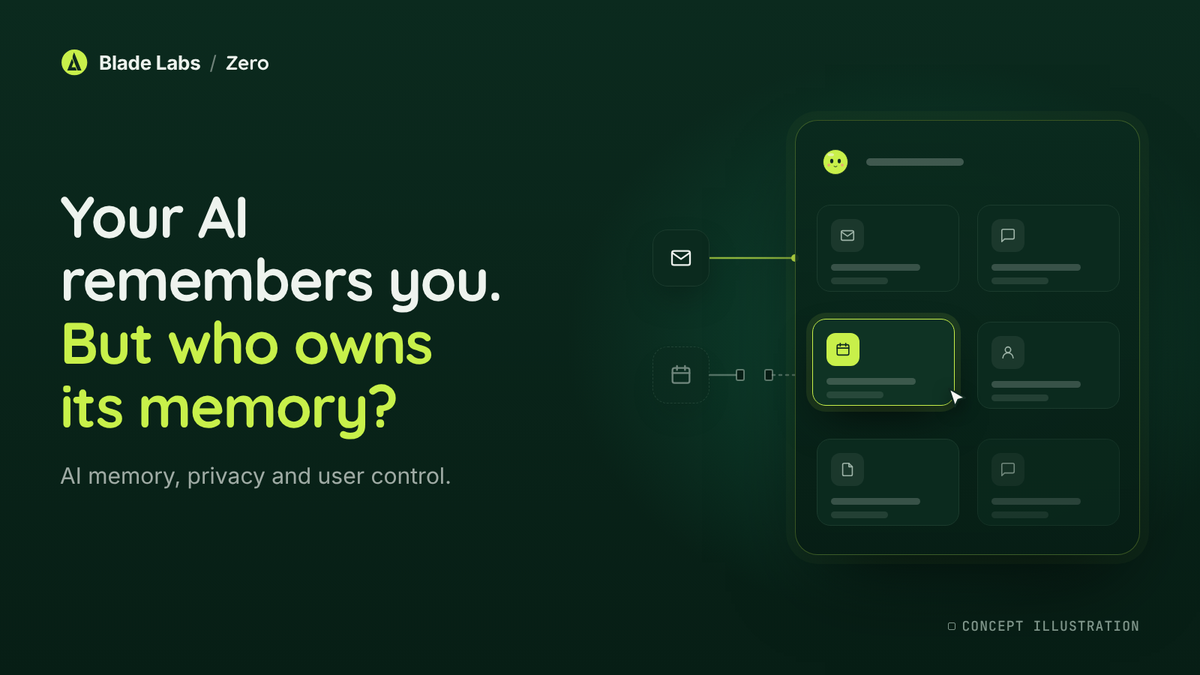
Imagine disconnecting your email account from an AI assistant, only to discover that it still remembers information from your previous conversations and connected applications.
Is that information still available to the AI? Can you correct or remove it? And if you decide to switch providers, can you take that accumulated knowledge with you?
These questions are becoming increasingly relevant as AI systems evolve from conversational assistants into persistent agents that retain information across tasks and interactions.
Anthropic's October 2026 launch of Claude Duet offers a useful example. In its accompanying safety and privacy documentation, Anthropic explains that disconnecting an application prevents Claude Duet from accessing it again, but information previously learned from that application remains in memory until the user resets it.
The distinction is significant. Removing access to a source does not necessarily remove the information an AI agent has already retained from that source.
As personal AI agents become more capable of managing ongoing responsibilities, their accumulated memory may become one of their most valuable features. It also introduces questions about privacy, confidentiality and control that cannot be resolved simply by allowing users to disconnect applications.
The central challenge is determining who can inspect, correct, restrict, remove and transfer the information an AI agent remembers.
What Does It Mean for an AI Agent to Remember You?
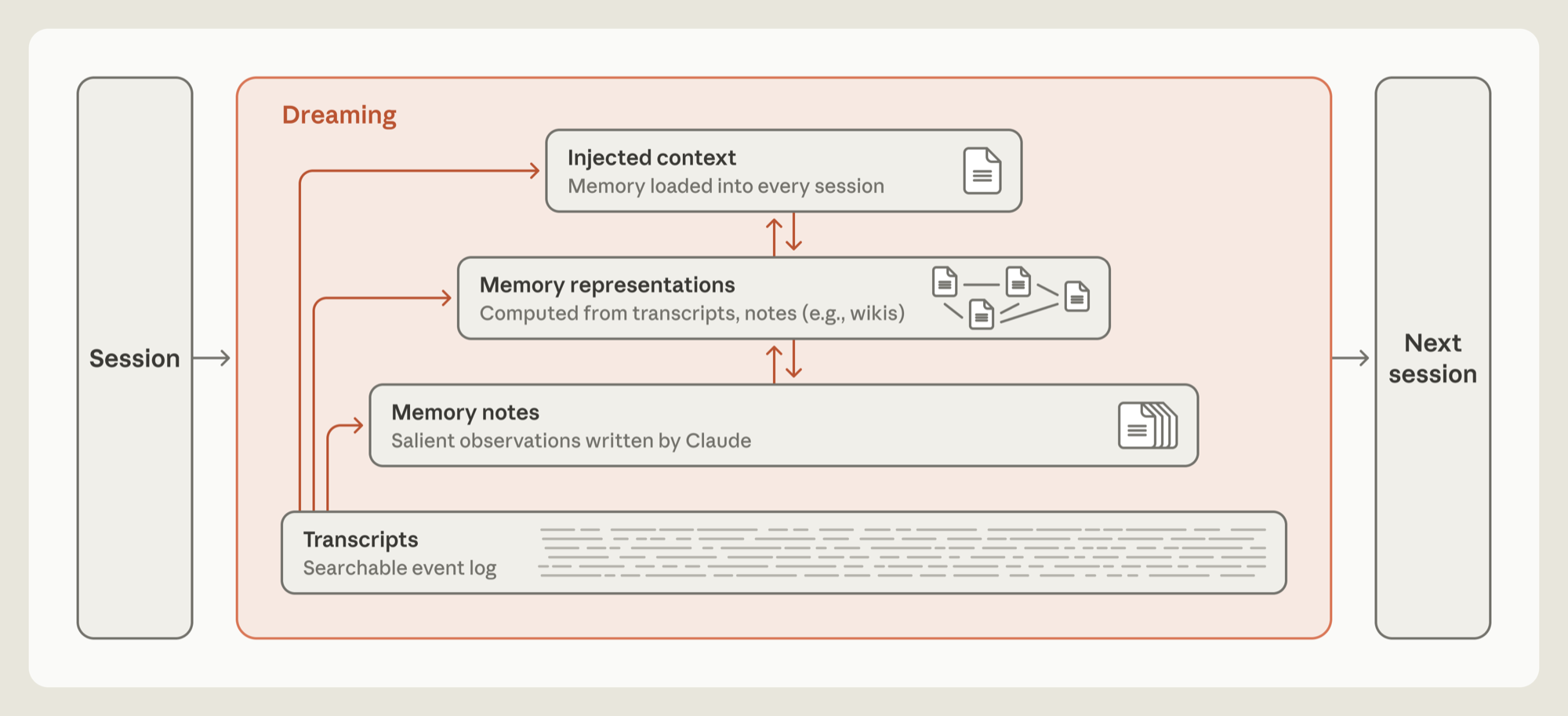
AI memory allows an assistant or agent to retain information that may be useful during future interactions.
Depending on the system, that information might include a person's preferences, previously discussed projects, recurring instructions, relationships or summaries derived from conversations and connected applications.
For example, an agent assisting a consultant might remember that a particular client requires weekly reports, that financial approvals must come from a designated manager and that certain documents should follow a specific format.
Retaining these details can reduce repetitive instructions. The agent can begin new tasks with relevant context instead of requiring the user to explain everything again.
However, the information stored in memory may have different origins and different implications.
A user might explicitly instruct the agent to remember a preference. The system might summarize an earlier conversation. It might also infer something from information retrieved through a connected application.
These distinctions matter.
An explicitly stated preference can often be confirmed directly. An inferred preference or conclusion may be inaccurate, incomplete or based on information that has since changed.
It is also important to distinguish an agent's stored memory from the credentials that allow it to access external services and from information encoded in an AI model's parameters. Correcting a retained memory note does not, by itself, retrain the model or establish that every copy of the underlying information has been erased.
As agents become more persistent, effective memory management must account for what information is retained, where it came from and when it should remain available.
Disconnecting an Application Is Different from Deleting AI Memory
One of the most important distinctions in persistent AI systems concerns access and retention.
Consider a consultant who connects an AI agent to a client's project workspace. Over several weeks, the agent helps prepare meeting summaries, tracks unresolved issues and learns which people are responsible for particular decisions.
When the engagement ends, the consultant disconnects the workspace.
That action should prevent the agent from obtaining new information through the disconnected integration. But what happens to the information already retained?
Depending on the system's design, previously stored summaries or memories may remain available for future tasks unless they are separately removed or restricted.
In the consultant's case, the distinction has practical consequences.
The agent might remember a harmless personal preference, such as how the consultant likes reports formatted. That preference may remain useful across engagements.
It might also remember a former client's confidential financial position, unresolved contractual dispute or internal project difficulties. Carrying that information into an unrelated assignment could be inappropriate, even if the agent originally obtained it through authorized access.
The fact that information was legitimately accessed at one point does not establish that it should remain available for every future purpose.
Anthropic's documented separation between disconnecting an app and resetting memory illustrates why providers need to communicate the consequences of these controls precisely.
For users and businesses, several actions need to be understood separately: disconnecting a source, deleting conversation history, correcting retained memory, resetting memory and closing an account.
Each may affect a different collection of information.
The relevant question is what each action actually changes, including whether information remains in other records, backups, exports or downstream systems.
Who Owns AI Memory? Legal Rights and Practical Control
The phrase AI memory ownership suggests that there is a single legal right determining who controls everything an agent remembers.
In practice, the position is more complicated.
An AI agent's retained information may include personal data about the user, confidential business information, records supplied by an employer and information concerning third parties.
Different legal and contractual rules may apply to these categories.
A user's ability to access or download an AI memory file, for example, does not automatically establish ownership of all the information within it. Similarly, information about a client does not become the consultant's unrestricted property merely because their personal AI agent remembers it.
Data protection law offers an important perspective, although it should not be confused with a general legal right of ownership over information.
Under the European Union's General Data Protection Regulation (GDPR), individuals have rights relating to their personal data, including access, rectification, erasure and data portability, subject to the conditions and exceptions established by the Regulation.
These rights have different scopes.
Article 16 addresses rectification of inaccurate personal data. Article 17 provides a right to erasure in specified circumstances, subject to exceptions. Article 20 establishes data portability rights where its conditions are satisfied, including the relevant legal basis for processing and automated processing of data provided by the individual.
The right to data portability does not extend automatically to every inference or assessment a provider creates from personal data. The European Data Protection Board's guidance on the right of access distinguishes the broader scope of personal data subject to access rights from the narrower scope of portability.
These legal protections matter where the GDPR applies, but they do not establish universal rights over all AI-generated memories, business records or agent configurations.
This is why practical memory control deserves separate consideration.
Regardless of whether a particular legal entitlement exists, an AI provider can design systems that make retained information easier to inspect, correct, restrict and export.
Those capabilities can help users exercise applicable rights while also improving the everyday reliability and accountability of persistent AI agents.
Four Controls That Make AI Memory Meaningfully User-Controlled
A claim that AI memory is user-controlled becomes more credible when the user can verify what that control means.
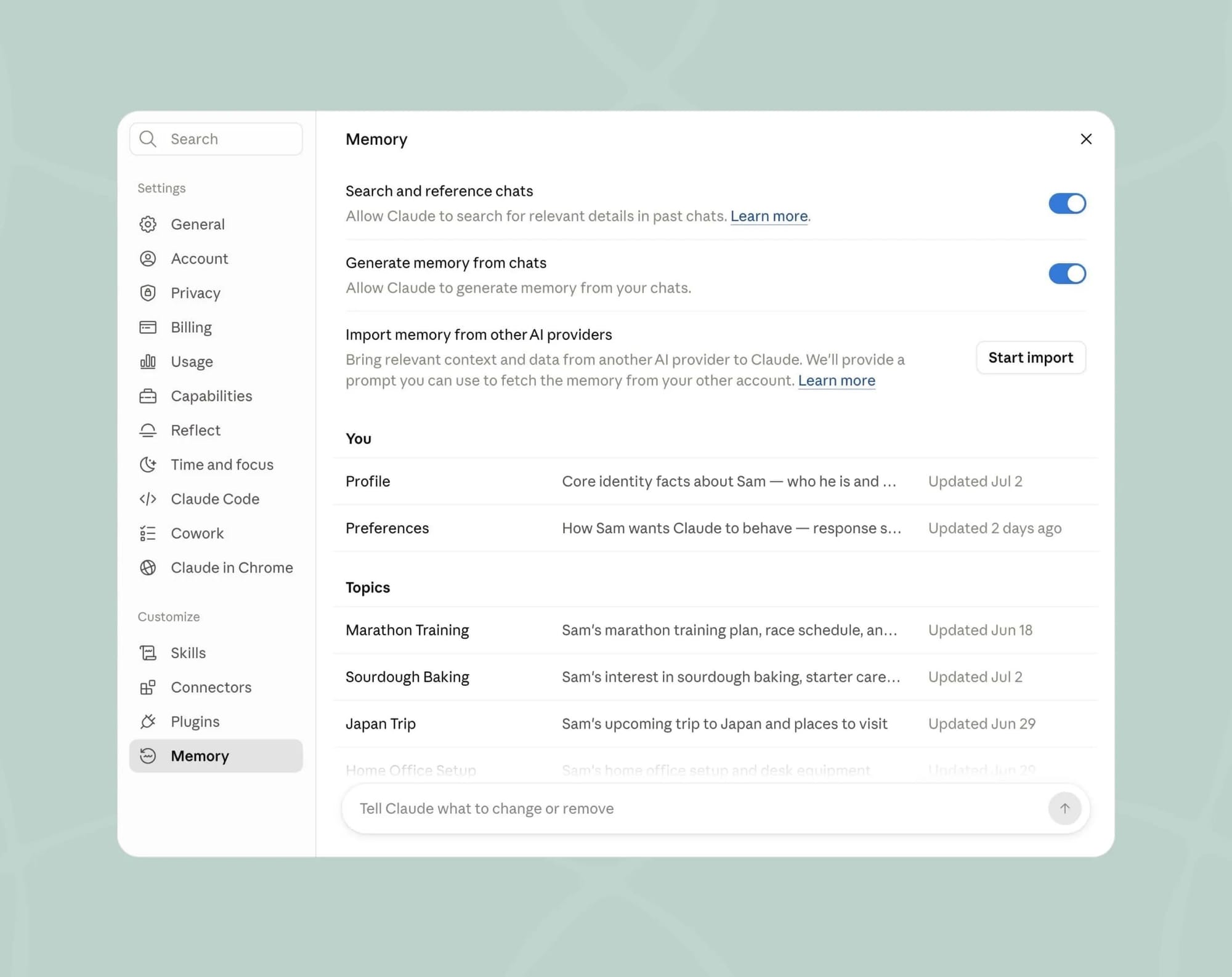
Four capabilities are particularly important.
1. Visibility: Can users inspect what the agent remembers?
An agent may retain information that the user has forgotten sharing or did not realize had been summarized.
If the agent believes that an employee who left six months ago still approves company expenditure, the user needs a way to identify and correct that information.
A useful memory interface should distinguish retained facts and preferences from interpretations where possible, and make the consequences of a correction understandable.
A conversational response acknowledging a correction is not necessarily evidence that the stored information used by future tasks has been changed.
2. Access restrictions: Which tasks can use the information?
An agent's memory may support multiple responsibilities involving different people, clients or projects.
Information that is relevant to one assignment should not automatically become available to another.
For example, a business might permit an agent to use a client's confidential project notes when preparing that client's report while preventing unrelated jobs from retrieving those records.
This requires appropriate access boundaries around retained information.
The objective is to make memory useful within its authorized context without turning accumulated knowledge into unrestricted access across tasks.
3. Correction and deletion: What changes when a user removes information?
Users need to understand the scope of each memory-management action.
If a retained fact is corrected, will future tasks use the updated version? If a memory is removed, can another task still retrieve it from a separate summary? What happens to associated exports, audit records or backups?
These outcomes cannot be inferred from a control labelled Forget or Delete.
The NIST Privacy Framework, published in January 2020, provides a voluntary, risk-based approach to identifying and managing privacy risks associated with data processing.
Its relevance to AI memory lies in treating privacy as an ongoing management responsibility. Appropriate protection involves examining how information is collected, processed, retained and used, rather than assuming that securing a connection resolves every privacy concern.
The framework does not certify an AI product's memory controls or establish that a particular deletion mechanism satisfies applicable law.
4. Portability: Can users take their memory somewhere else?
The value of persistent AI memory may increase as an agent learns more about a person's preferences, responsibilities and working habits.
That accumulated context can also create dependence on a particular provider.
An export function is an important starting point. It allows users to obtain information outside the application where it was created.
But a readable export and usable portability are not necessarily the same outcome.
A file may contain preferences, notes and project summaries without preserving the relationships, permissions or instructions required for another agent to use them appropriately.
A different provider might be unable to interpret the information's structure. It may also require users to rebuild their configurations, reconnect applications or manually recreate important context.
Practical portability therefore involves examining whether information can be exported in a usable form, understood by another system and reused within appropriate access boundaries.
It does not necessarily mean reproducing the original agent's complete behavior.
For businesses, this distinction matters when evaluating dependence on a provider and planning how essential operational knowledge can be retained if an AI service changes or becomes unavailable.
How Can Businesses Test AI Memory Control?
The strongest way to evaluate memory controls is through a bounded workflow with observable results.
Consider the consultant's example again.
A business could create a test environment containing a synthetic client fact and a harmless personal preference.
The agent would first be instructed to retain both. The tester would then correct the client fact, disconnect the source application and start a separate assignment with different access permissions.
The evaluation would examine whether the corrected information is used, whether unauthorized retrieval is refused and whether disconnected access prevents further collection from the original source.
Finally, the user could request a memory export and inspect whether the contents are understandable and suitable for the intended destination.
This sequence tests more than whether the agent remembers information accurately.
It examines whether the system can distinguish between information that remains useful, information that must be corrected and information that should no longer be available within a particular context.
A successful test would provide evidence about the specific controls exercised. It would not, by itself, establish full privacy compliance or guarantee that every possible memory-related failure has been addressed.
For organizations, however, this type of evaluation offers a practical basis for comparing product capabilities and identifying limitations before expanding access to sensitive information.
Zero and Atlas: Towards User-Controlled AI Memory
At Blade Labs, questions of memory ownership, continuity and user control inform the development of Zero and Atlas.
Zero is being developed around the concept of an AI chief of staff that can assist with continuing responsibilities. Atlas is part of the broader technical direction for retaining and managing the information that supports that continuity.
An important architectural consideration is keeping retained memory distinct from the agent's immediate execution environment.
Such separation can provide a foundation for preserving information across execution sessions, managing access to different memory scopes and developing mechanisms through which users can inspect and retain their information.
The longer-term direction includes making memory more visible and portable, allowing users greater control over the information their AI agents accumulate.
These are development objectives. The existence of underlying memory-management components should not be interpreted as confirmation that complete customer-facing memory portability, cross-provider migration or complete deletion controls are already available.
The significance of this direction lies in recognizing that memory will become an increasingly important part of the relationship between users and persistent AI agents.
An agent may be able to perform more useful work when it understands its user's established preferences and responsibilities. But the value of that context depends on whether it remains accurate, appropriately restricted and subject to meaningful control.
As persistent agents become more widely used, memory architecture and user controls will be important considerations in evaluating their long-term usefulness.
Conclusion: AI Memory Should Remain Accountable to Its User
Persistent AI memory creates opportunities for more useful and personalized assistance. An agent that can retain relevant context may reduce repetitive instructions and support work across longer periods.
But the same capability makes it important to understand how retained information is managed as circumstances change.
An application may be disconnected while previously learned information remains. A remembered fact may become outdated. Information that was appropriate for one assignment may be confidential or irrelevant in another.
For AI memory to remain useful, users and organizations need clarity about what information is retained, how it can be corrected, when it may be used and what happens when they leave a service.
Legal rights provide part of that protection. Product architecture and verifiable controls determine how much practical control users can exercise in everyday interactions.
As AI agents become more persistent, control over retained information will be an increasingly important measure of their trustworthiness and usefulness.
At Blade Labs, we are exploring these challenges through the development of Zero and Atlas, with a focus on governed AI execution and user control.
Explore Zero and the future of personal AI agents at Blade Labs.
Blade Labs is taking on design partners: 90 days with your team, your jobs set up, first landing in week one. Become a design partner.
Frequently Asked Questions
1. Does disconnecting an application delete what an AI agent remembers?
Not necessarily. Disconnecting an application generally removes the agent's ability to obtain new information through that connection, but it may not remove previously retained information. Anthropic's Claude Duet documentation, for example, distinguishes disconnecting an application from resetting the information the agent has already learned. Users should review the specific provider's memory and deletion controls.
2. Who legally owns the information stored in AI memory?
There is no universal ownership rule covering all information stored in AI memory. Applicable rights depend on the nature of the information, contractual arrangements, intellectual property rules and relevant data protection laws. Personal data rights, including access and erasure under the GDPR where applicable, should not be confused with unrestricted legal ownership of all retained information.
3. Can users delete or correct information stored in AI memory?
Some AI systems provide controls to correct or remove retained memories. However, the consequences depend on the provider's architecture and retention practices. Users should distinguish memory correction from conversation deletion, account closure, backup retention and information previously transferred to other systems. Changing stored memory does not automatically retrain the underlying AI model.
4. What is AI memory portability?
AI memory portability refers to the ability to retrieve retained information in a form that can be reused outside the original AI system. Practical portability may involve exporting data, preserving useful context and transferring information into another compatible environment. An export file alone does not guarantee that another agent can reproduce the same behavior, permissions or working context.
5. How can businesses evaluate user-controlled AI memory?
Businesses can use synthetic information to test whether an agent correctly retains, updates, restricts and exports memory. The evaluation should include changes to source access and attempts to retrieve information outside an authorized task. Results should be assessed against defined expectations, with particular attention to confidentiality, accuracy and the visibility of retained information.
References
- Anthropic. Introducing Claude Duet. 21 October 2026.
- Anthropic. Claude Duet Safety, Privacy, and Security. 23 October 2026.
- National Institute of Standards and Technology (NIST). NIST Privacy Framework: A Tool for Improving Privacy through Enterprise Risk Management, Version 1.0. 16 January 2020.
- European Parliament and Council of the European Union. Regulation (EU) 2016/679 — General Data Protection Regulation. 27 April 2016.
- European Data Protection Board (EDPB). Guidelines 01/2022 on Data Subject Rights — Right of Access. Adopted 28 March 2023.
- Data Protection Commission, Ireland. The Right to Data Portability (Article 20 of the GDPR). Official regulatory guidance, undated.
- Anthropic. The components of agent memory. 6 November 2026.
- Anthropic. Switch to Claude without starting over. Product page, undated; accessed 10 November 2026.